
Passed the Halfway Mark

Passed the Halfway Mark

We kicked off week nine of the 2020 Regular Session with a visit from two special guests in the Senate chamber, Save the Children Action Network President, Mark Shriver and award-winning actress, Jennifer Garner. Many might not know that Jennifer Garner grew up in West Virginia where she witnessed the effects of generational poverty on children, similar to those we see in rural Kentucky. With the help of local advocates, Ms. Garner and Mr. Shriver are working to preserve funding for Save the Children’s early childhood education and literacy programs, which serve more than 12,000 children throughout the Commonwealth. It was an honor to welcome them to Frankfort. 

The Kentucky General Assembly crossed another mile marker this week by reaching the deadline to file new bills. Slightly less than 1,000 bills were filed — 286 Senate bills and 647 House bills. With the bill filing deadline behind us, we now have a more complete view of the issues lawmakers will take up this year. There are sure to be tough decisions and compromises made in the final weeks ahead.

Senate Bill (SB) 2, the proposed voter ID requirement, passed in the House on Tuesday with various amendments to find a compromise among House members.  However, the Senate voted to “not concur” with these changes, and is therefore asking the House to recede from its changes to the bill.  If the House does not “recede,” SB 2 may then move to a conference committee, made up of both House and Senate members, for further discussion.  If a compromise between chambers can be hammered out, the Conference Committee issues a new draft that then gets a vote in each chamber.

The medical marijuana bill, HB 136, was referred to the Senate Judiciary Committee this week and I’m continuing to read through the proposal, marking it up with questions and comments. I plan to meet with the bill sponsor next week to work through those concerns. Separately, House Resolution 5, which urges national drug organizations, such as the U.S. Food and Drug Administration, to expedite research into the potential therapeutic benefits and risks of using marijuana for health purposes, passed the Senate with broad bipartisan support.

Today, women make up less than 25 percent of the tech and computer science workforce. SB 193 establishes a goal of increasing participation in computer science courses by underrepresented groups, including females, minorities, students with disabilities, English language learners, and students whose families are eligible for free or reduced-price lunch. SB 193 includes the number of computer science courses or programs offered in each school, as well as the nature of those courses or programs, and the number of instructors required. I am proud to support this bill and hope to see an increase in computer science participation upon its passage. 

In the healthcare space, we’ve been active on several bills including a measure which passed this week to rein in “surprise medical billing.” This occurs when patients receive care — often unwittingly — outside of their insurer’s network and subsequently get a bill for inordinate amounts of money that can potentially bankrupt a family. SB 150 seeks to stop the practice by requiring insurers to cover surprise medical billing. SB 150 would require the state insurance commissioner to establish a database of billed health care service charges, and it would provide a dispute resolution program for medical insurers and providers to work out their differences over these out-of-network charges, not the patient.  While the bill isn’t as aggressive as I’d like, we hope it spares families from getting hit with bills that send them over a financial cliff.

Once again, a bill to criminalize the “doxing” of minors, SB 182, passed the Senate. By definition, doxing is the act of publicly identifying or publishing private information about someone, especially as a form of punishment, intimidation, or revenge. This legislation stems from the students in Northern Kentucky who were doxed following the posting last year of an infamous video of a student with a Native American protester in Washington D.C. The students at that school and even their families have been threatened and harassed by strangers seeking to intimidate them. SB 182 is a commonsense step to address the growing problem of cyber harassment in today’s digital-driven era, and would protect the privacy of minors.

As usual, a number of other bills moved through the Senate this week, including these:

SB 21 allows veterinarians to report the abuse of animals under their care. Currently, veterinarians are prohibited by law from reporting abuse of animals under their care unless they have the permission of the owner or are under a court order. 

SB 80 is the statutory companion to the Marsy’s Law constitutional amendment (SB15), and is identical to the process from 2018 when it last passed. SB 80 lays out various implementation details for Marsy’s Law including expanding the definition of victim to include all felony offenses and the most serious misdemeanors, what happens when there are multiple victims, or who has the power to assert the victim’s rights if a victim is deceased.  These statutory changes are contingent on the ratification of Marsy’s Law by the voters.

SJR 35 directs the Cabinet for Health and Family Services to establish the Task Force on Services for Persons with Brain Injuries.

SB 115 amends the statute regarding the tuition waiver for Kentucky foster or adopted children to include graduate programs and extends the eligibility time period to 10 consecutive or non-consecutive semesters up to age 28.

SB 136 requires home health aides who have not provided services to clients who have Alzheimer’s disease or other forms of dementia to complete four hours of approved dementia training. 

SB 148 Requires individuals applying to claim certain agriculture exceptions to first apply for an agriculture exemption number from the Kentucky Department of Revenue (DOR). The bill further requires that DOR develop a searchable agriculture exemption number database for sellers and retailers to use for verification. 

SB 159 sets regulations for the operation and maintenance of splash parks and to establish their separation from facilities with full-blown swimming pool installations.

Thank you for staying engaged in the legislative process. It is an honor to serve you in Frankfort and I welcome your questions and comments about these issues or any other public policy issue, As always, please call me toll-free at 1-800-372-7181, email me at Whitney.Westerfield@LRC.ky.gov.

###

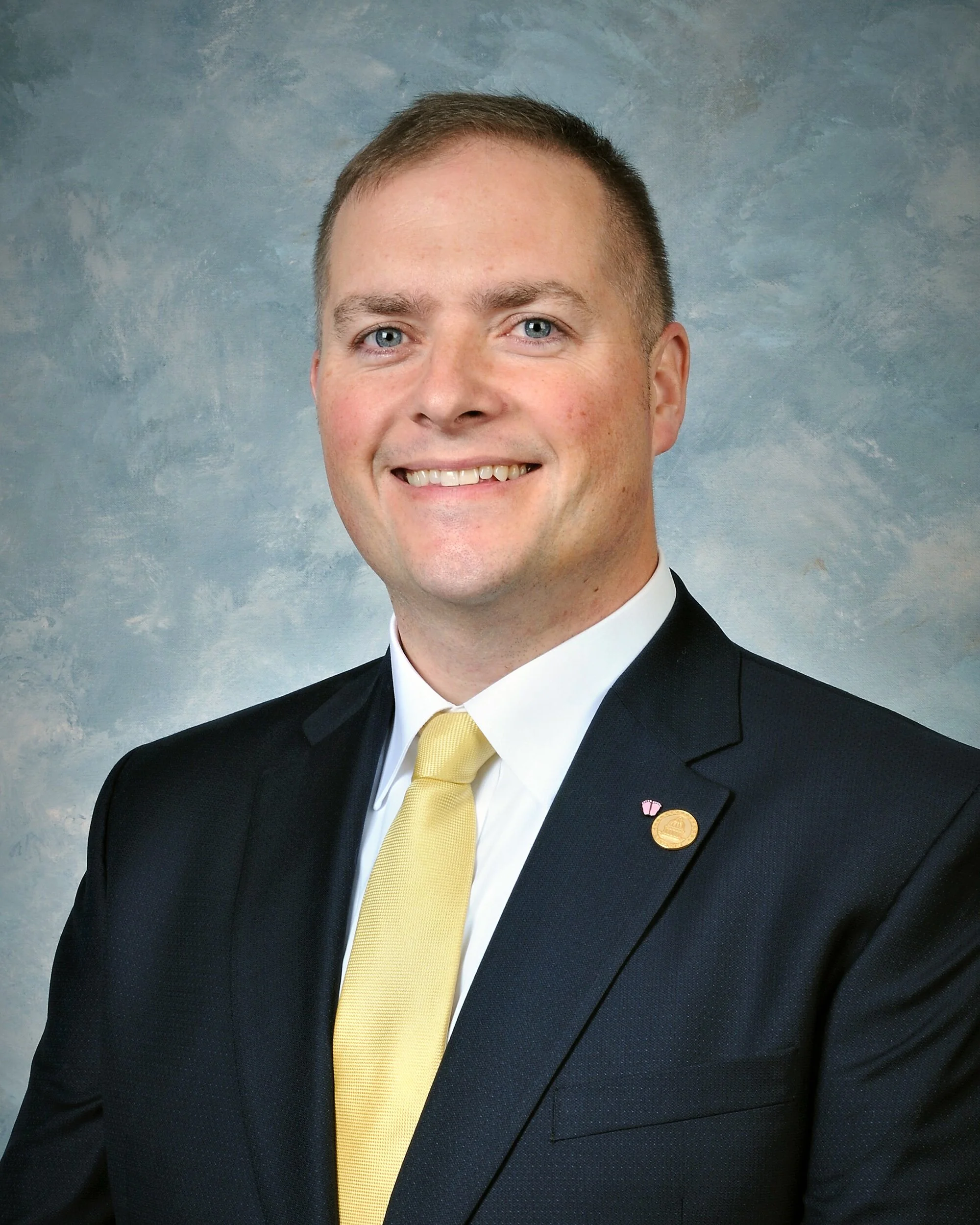
Note: Senator Whitney Westerfield (R-Hopkinsville) represents the 3rd District including Christian, Logan, and Todd counties. He is the chairman of the Judiciary Committee. Senator Westerfield also serves as a member on the Veterans, Military Affairs and Public Protection Committee; the Agriculture Committee; the Capital Planning Advisory Board; the Natural Resources and Energy Committee; the Tobacco Settlement Agreement Fund Oversight Committee; the Program Review and Investigations Committee; the Child Welfare Oversight and Advisory Committee; the Public Assistance Reform Task Force, and as a liaison member of the Budget Review Subcommittee on Justice and Judiciary. For a high-resolution .jpeg of Senator Westerfield, please visit https://legislature.ky.gov/Legislators%20Full%20Res%20Images/senate103.jpg

VICTIMS OF CRIME ARE STILL COUNTING ON YOU, KENTUCKY

VICTIMS OF CRIME ARE STILL COUNTING ON YOU, KENTUCKY

Sen. Whitney H. Westerfield (R, Crofton)    Credit: LRC Public Information

Sen. Whitney H. Westerfield (R, Crofton) Credit: LRC Public Information

In 2018, the General Assembly and Kentucky voters demonstrated their strong support for crime victims when they overwhelmingly adopted the Marsy’s Law constitutional amendment. Their intent was as clear as their message: “you deserve better, we support you, and your voice matters”. Victims were able to breathe a sigh of relief knowing they would finally be afforded the same level of constitutional protections as the accused and convicted.

But their hopes were soon dashed by a last-minute legal challenge—not on the merits of Marsy’s Law, but on a mere technicality—prompting a Supreme Court ruling which ignored more than a hundred years of established legal precedent. And with that, victims were once again left behind by the very system put in place to protect them.

Kentucky crime victims now need your help once again. 

As we kick-off the 2020 legislative session, I am proud to again champion Marsy’s Law in the Kentucky General Assembly. The journey to adopt this important constitutional amendment began several years ago, and while the calendar may have changed, the need remains the same: Kentucky crime victims deserve constitutional rights.

It is important to understand that Kentucky’s Supreme Court made no ruling on the substance of Marsy’s Law. And, despite the set-back, the energy behind Marsy’s Law remains strong with victim advocates, notable organizations, and my fellow legislators from across the Commonwealth. I am committed to passing this important constitutional amendment again, in keeping with the Court’s ruling, so that the voters will have their say.

...while the calendar may have changed, the need remains the same: Kentucky crime victims deserve constitutional rights.

Simply put, we need Marsy’s Law in Kentucky because it would finally give victims of crime a constitutionally protected right to be notified, be heard, and be present at key court proceedings without infringing upon the rights of the accused and convicted. 

Throughout my time as both a prosecutor and a legislator, I have spoken to many people who have been hurt by the imbalance our current system allows. Their stories of fear, loss, and pain are heartbreaking. But we have an opportunity before us once again to correct this imbalance of justice and ensure victims are provided the rights they deserve.

During my tenure as Chairman of the Judiciary Committee I have proudly championed many meaningful efforts, including criminal justice reform, drug abuse care and prevention, and protections for dating violence victims. I have advocated for the people of Kentucky through legislation to address these matters, not because they are partisan in nature, but because they are issues that matter to all Kentuckians. Honoring the rights of crime victims is no different. Marsy’s Law is a bipartisan, common-sense effort to help victims of crime achieve the justice they deserve.

I am excited and thankful to be part of the effort to bring Marsy’s Law to Kentucky. And I know that with the energy behind it we will succeed in 2020. I urge you to join in this fight for crime victims once again.   

2020 — Week 1

2020 — Week 1

The first week of the 2020 Regular Session of the Kentucky General Assembly has come to a close. We had a productive week in Frankfort and left with confidence in what the session has in store. It was a pleasure to begin the session on Tuesday with a visit from the 100th Army Band from Fort Knox, who performed an extraordinary rendition of "My Old Kentucky Home" and our National Anthem.

As with the early stages of any session of the General Assembly, some procedural measures were in order. The Senate members have listened to feedback from our constituents and have prioritized several pieces of legislation that are hopeful of passing this session. Those bills, among others, were assigned to their respective committees this week. Committee hearings begin next week and provide the public an opportunity to hear about the legislation.

The legislation I have or intend to file is of significant importance to me. One, in particular, is Senate Bill 9, the Born Alive Infant Protection Act. This bill would require that physicians and other health workers to do everything possible to save the life of an infant born alive after a failed abortion attempt. I am proud to be the sponsor of this crucial legislation to protect and provide dignity to those most in need of it. 

As your Senator in District 3, I also feel it is essential to provide dignity to crime victims by allowing them a seat at the table within the criminal justice process. I have once again filed legislation in support of a victim's rights constitutional amendment, known as Marsy's Law.  Both the Kentucky General Assembly and more than 800,000 (63%) Kentucky voters overwhelmingly supported Marsy’s Law in 2018. Victims across the Commonwealth breathed a sigh of relief knowing they would be afforded the constitutional rights they deserve. Unfortunately, the Kentucky Supreme Court overturned the clear will of the people on a technicality which ignored more than a hundred years of established legal precedent. It is important to note that the Supreme Court made no ruling on the substance of Marsy’s Law. And, the General Assembly willing, Kentucky voters will have another opportunity to support this important amendment for crime victims on the 2020 ballot. 

Bills must be presented at a public committee meeting and passed with a majority vote before heading back to the Senate to be voted on by the entire Senate body. If the bill is approved by the Senate, it heads to the Kentucky House, where the same process occurs. Once a bill is passed by both chambers it is submitted to the Governor for his signature or veto.

The proverbial elephant in the room for the 2020 session is, of course, the General Assembly's duty to pass a balanced two-year budget and two-year road plan. My colleagues and I in the Kentucky Senate are working diligently with members of the Kentucky State House in preparation for this crucial responsibility.  We are eager to hear the Governor’s budget address before a joint session of the General Assembly on January 28th, and get the budget process moving.

As always, if you have any questions or comments about these topics or any other public policy issue, please call me toll-free at 1-800-372-7181 or email me at Whitney.Westerfield@LRC.ky.gov.  You can also review the Legislature’s work online at www.legislature.ky.gov and live stream the proceedings and committee meetings of both chambers using the KET app or online at https://www.ket.org/legislature

# # #

Note: Senator Whitney Westerfield (R-Hopkinsville) represents the 3rd District including Christian, Logan, and Todd counties. He is the chairman of the Judiciary Committee. Senator Westerfield also serves as a member on the Veterans, Military Affairs and Public Protection Committee; the Agriculture Committee; the Capital Planning Advisory Board; the Natural Resources and Energy Committee; the Tobacco Settlement Agreement Fund Oversight Committee; the Program Review and Investigations Committee; the Child Welfare Oversight and Advisory Committee; the Public Assistance Reform Task Force, and as a liaison member of the Budget Review Subcommittee on Justice and Judiciary. For a high-resolution .jpeg of Senator Westerfield, please visit https://legislature.ky.gov/Legislators%20Full%20Res%20Images/senate103.jpg

Senator Whitney Westerfield Announces Re-Election Bid

IMG_0920.PNG

CROFTON, KY — Republican state Senator Whitney Westerfield will seek re-election to Kentucky’s 3rd Senate district for a third term in office. His campaign will focus on continuing to achieve real results for the district and upholding conservative values.

Westerfield serves Christian, Logan, and Todd counties in Frankfort. He is also a life-long resident of Christian County and has been widely regarded as a workhorse for his district. “I am extremely grateful for the support I have received here at home,” said Westerfield. “Since 2013, I have helped pass bipartisan legislation, fought hard for government transparency, protected the unborn, worked to improve public safety, and promoted economic opportunity for the families in our district. I am as ready as ever to take your voices to Frankfort and lead the charge towards solving our most pressing issues.

Westerfield has served as chairman of the Senate Judiciary Committee throughout his time in office. He sponsored Senate Bill 200 in 2014, which brought about the largest reform to Kentucky’s juvenile justice system in 30 years.

Slow and steady wins the race,” said Westerfield. “Being a successful legislator requires persistence, which is why I’ve filed for re-election. I have been fortunate to see legislation come to fruition that has been years in the making. I promise to continue expanding opportunities for struggling Kentuckians and reforming policies that inadequately address the real issues our communities face.”

Westerfield’s current term in office stretches through 2020, when state lawmakers will be expected to write a new budget. “We have a Republican majority in Frankfort and a new, Democratic governor at the helm,” said Westerfield. “Looking at that dynamic alone, I can anticipate the challenges that will lie ahead. However, the good people of Western Kentucky expect their state leaders to find common ground.”


Westerfield has been an active member of the Kentucky Bar since October 2006. Because of his practical experience as a local attorney, his legislation has focused largely on improving the justice system and developing services that protect victims of crime. Westerfield’s prosecutorial record has included successful convictions on charges ranging from misdemeanors to homicide.

Kentucky's state Senate elections will take place in 2020. For more details on Senator Westerfield’s record and this campaign, please visit WhitneyWesterfield.com.

###

Quasi Quandary

Quasi Quandary

You have probably heard of the imminent extraordinary or “special” session of the Kentucky General Assembly. Included in the Governor’s veto message on HB358 from the 2019 Regular Session was a promise to issue a call for an extraordinary session to address the pension problem for quasi-governmental agencies before July 1. So what is this pension problem anyway?

Quasi-governmental agencies are pretty much exactly what their name suggests: agencies that are not explicitly government departments, but are exclusively (or very nearly exclusively) funded by government (read: taxpayer) funds, and they each perform essential functions for the populations they serve.* These agencies are designated as non-profit organizations. The Christian County Health Department, Pennyrile Children’s Advocacy Center, Sanctuary, and the Pennyroyal Mental Health Center are some of the primary quasi’s in this area, though the last three in that list have a service regions that extend well beyond our own county line.

No other agencies or arms of state government exist to perform any of these services.

A few decades ago, someone thought it would be good to include these agencies in the Kentucky Retirement Systems. I don’t think that’s a bad idea necessarily, and at the time it looked like a very good one. The employer contribution rate for each participating employee was very low. However, with time, that employer rate has climbed up. Today these agencies are paying somewhere in the neighborhood of 49% of payroll. That means, for every dollar of payroll, the agency is having to find another 49¢ to send to KRS. First, for these non-profit agencies, finding that additional 49¢ is very challenging, as it starves out funding for other important needs like adequately compensating staff, procuring important supplies, expanding their critical services (which all our communities need), or even maintaining their locations. Second, the 49¢ is actually way lower than it should be to keep KRS funded adequately. In truth the employer contribution rate should have been steadily climbing for many years.

So, here we are, facing a July 1st deadline when the rate jumps to at least 83% overnight. For other participating employers not deemed quasi-governmental we’ve already passed a solution that phases in that rate increase over time. Cities and counties now have a new imperative to find all the revenue they can to make ends meet. HB358 as passed this year would have forestalled that big rate jump for quasi-governmental agencies for a year while these agencies decide whether and how to proceed, by staying in the system or getting out, both of which would have resulted in increased costs. The veto struck that bill in its entirety, so without a special session to pass something else that offers immediate relief, the rate jumps up come July. With that enormous rate increase comes the almost certain reduction in staff and services for most, if not all, quasi agencies.

We risk the loss of staff and services from a group of agencies that provide services the state is neither prepared nor equipped to provide. The Pennyrile Children’s Advocacy Center performs forensic interviews and provides vital care and services for children victimized by sexual assault. Just a couple short months ago the Christian County Health Department helped administer hundreds of vaccinations for Hep-A after a handful of cases hit the county jail. Sanctuary provides emergency housing and security, among other services, for women and their children in need of escaping physical abuse. No other agencies or arms of state government exist to perform any of these services. PCAC, Sanctuary and the Pennyroyal Center serve multiple counties. If their employer contribution rate goes up in July those service footprints in other areas are at risk of evaporating.

On the other hand, the Kentucky Retirement System needs to be made whole. Even giving cities and counties phase-in relief last year hurt the CERS bottom line. Every day a participating employer or employee (or legislature) doesn’t pay all they’re supposed to, the system and its retirees get shortchanged. We can’t afford KRS going under. We can’t afford these agencies going under. A balance must be found.

We can’t afford KRS going under. We can’t afford these agencies going under. A balance must be found.

The Governor has done what legislative leadership asked following his veto: come to us with proposal. I attended a briefing conducted by his senior staff last week and I raised a number of questions. The bill includes a one year rate freeze for quasi agencies, and grants them that time to decide which path they want to take: stay in and pay full freight, or get out of the system through one of three different doors. I believe the agencies that cannot afford to pay the full price of staying in should get out of the system, but I firmly believe they should be given a way out that is affordable. The proposal provides only one way out that is truly affordable to most of these agencies, called the “hard freeze,” and requires all Tier 1 and 2 (the senior most) employees to be pulled out of the system along with the agency. Those workers will of course keep everything they’ve accrued, but cannot earn any additional time toward their retirement mark in KRS as long as they remain with that employer. I disagree with pulling those folks out of the system. The options that allow those employees to remain are cost prohibitive for all but the most wealthy quasi agencies, and I’m not aware of any agency in the three counties I represent that can afford them.

There are other concerns, unique to certain quasi agencies, including the change to how their payments to KRS are classified. State and Federal grant funds that flow to places like Sanctuary restrict the use of those dollars for costs directly related to personnel, and attached “fringe benefits.” The proposal would require payments from the agencies toward the unfunded liability, not explicitly connected to payroll, making today’s grant dollars used for payroll unavailable for tomorrow’s debt service.

Similarly, there are three community mental health centers, including the Pennyroyal Center, who act purely as hiring agents for the state when staffing certain facilities. Those employees are governed entirely by the state, but they are currently counted against the CMCHs’ unfunded liability. This is not right. Unfortunately, the proposal before us addresses neither of these issues, and I have been given no affirmative assurance that there will be a material, meaningful effort to fix those problems in the 2020 Regular Session.

I’ve asked the Governor and his team to make modest adjustments to the proposal to make the cessation options slightly more affordable, and to address these two issues that directly impact the local agencies for whom I speak in Frankfort. Unfortunately, I have received no feedback that suggests changes to the proposal would be welcome. I will continue to advocate for those changes, ahead of any potential special session, and during the 2020 session if need be. Needless to say, this issue is among the most complicated the legislature has had to deal with. Getting the answer just right is that much more important.

* The group of quasi-governmental agencies also include all public universities in the Commonwealth other than UK and UofL, both of whom have their own pension systems. However, this post is about all the quasi’s other than the universities. These institutions are also vital to the Commonwealth, but they are on a much different fiscal footing than all the others. They are able to raise tuition and fees, they each have private foundations, and generally have more assets than the rest of the quasi group. To my knowledge, the public university group has been satisfied with each version of HB358 that was passed during the regular session and they are in support of the Governor’s proposal.