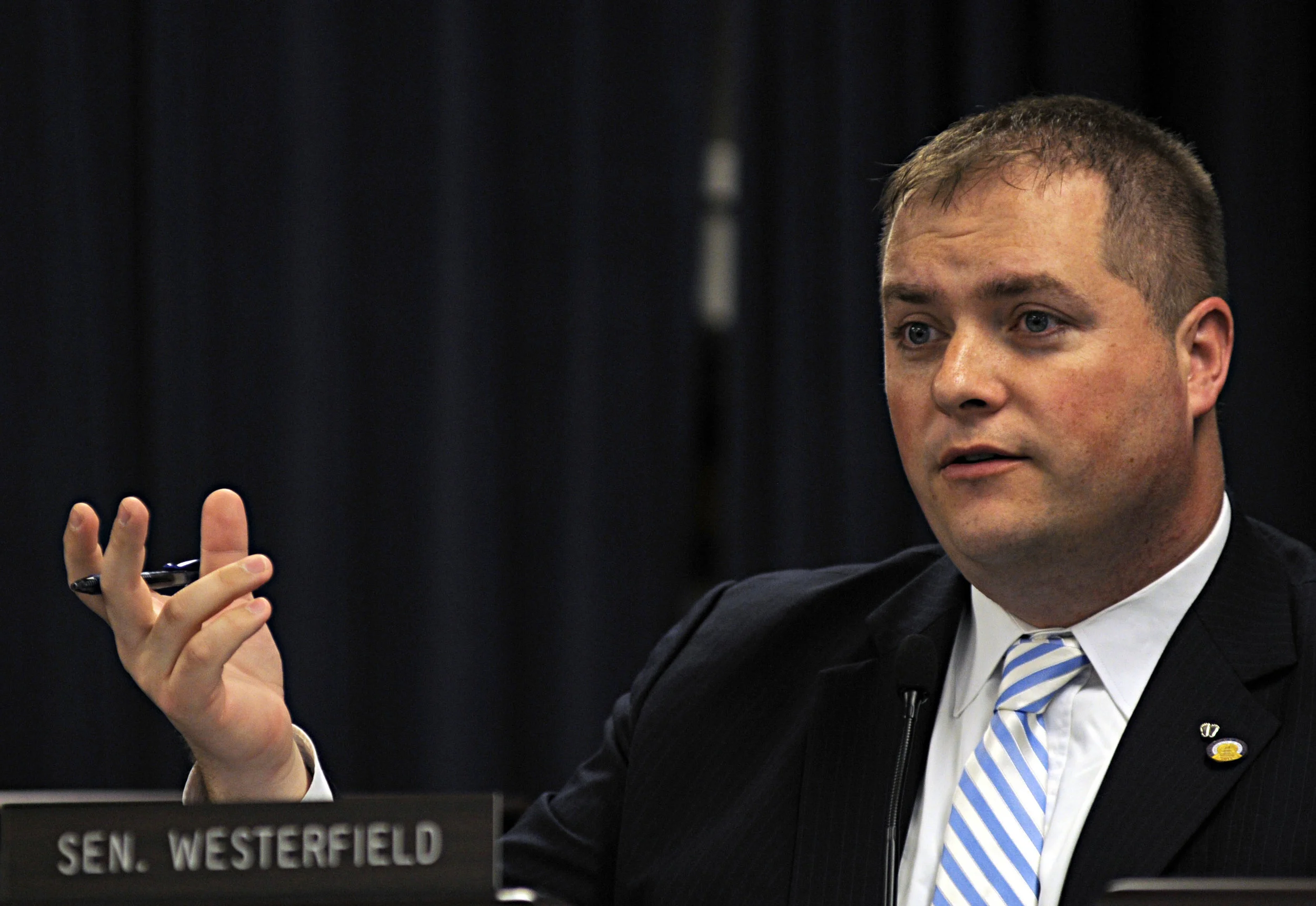
CJPAC Update

CJPAC Update

As was announced in this space a couple of months ago the Bevin administration and legislative leaders from both parties and chambers were joined to create the Governor's Criminal Justice Policy Advisory Committee.  Since the creation of "CJPAC" we've heard a steady stream of data and policy testimony to provide legislative food for thought as we look ahead to the 2017 session.

Last month the CJPAC divided into several subgroups to study specific issues in greater detail:

  • Penal Code
  • Reentry
  • Recidivism Reduction
  • Probation and Parole reforms
  • Drug Policy
  • Prevention
  • Jail reform

I've been assigned to the Penal Code group, tasked with examining any changes to the entire criminal code.  In case you wanted to take a look at every single criminal offense on the books (in the penal code and outside of it) I hope you have some free time on your hands.

Our small group has met once by phone and once in person so far, and we have another meeting scheduled in just under two weeks when we'll discuss continued changes to some of the biggest pain points in the criminal code.  Should some offenses be reclassified to carry more serious penalties?  Lower penalties?  Where are the inconsistencies (possession of child porn carries the same penalty as possession a stolen license plate, for example)?

Last month during the Judiciary committee meeting we heard from prosecutors about the need to eliminate the "violent offense" label in the code.  Especially for everyone outside the court system the suggestion that some crimes are deemed "violent" and others are not is frustrating.  It is also a bit of a misnomer.  There isn't actually a "violent offense" statute, but rather a handful of crimes that carry a "violent" level of parole eligibility.  For these few crimes a convicted individual must serve a full 85% of their imposed sentence before becoming merely eligible for parole.  You can find that statute and the list of applicable crimes right here if you're interested.  It's a short read.  But the bottom line is that there are a great many crimes that anyone of us would deem "violent" that aren't included in that statute.  There's a growing opinion (that I share) that we should remove that label.

We'll take a look at parole eligibility across a number of crimes.  Should the eligibility threshold move up; drop down; stay put?  We have crimes at 15%, 20%, 50% and 85% (50% is a relatively new group, containing a specific high-level theft, certain cases of heroin trafficking).

At the CJPAC meeting last week we heard from the Department of Corrections and from Pew Charitable Trusts (examining Kentucky's own DOC data) and we can identify a number of trends that demand further attention.  For example, the rate of women being incarcerated has increased 25% compared to only 5% for men since 2007.  Property offenses in prison admissions have climbed by nearly 50%.  Two-thirds of prison admissions are for violations of supervision conditions (probation & parole).  I strongly encourage you to take a look at the charts and takeaways in that data presentation.

Needless to say, no small task awaits us.

Bookmark this page or visit my Apple News channel to stay up to date on what's happening with the CJPAC and other legislation as we approach the 2017 session in January.  If you have some input or feedback please contact me here or here!

Sen. Westerfield Appointed to National Cybersecurity Task Force

Sen. Westerfield Appointed to National Cybersecurity Task Force

For Immediate Release
Contact: John Cox
859-492-2963
John.Cox@LRC.KY.GOV

SENATOR WHITNEY WESTERFIELD APPOINTED TO NCSL TASK FORCE ON CYBERSECURITY

FRANKFORT, Ky. (August 2, 2016) – Senate President Robert Stivers (R-Manchester) announced the appointment of Senator Whitney Westerfield (R-Hopkinsville) to  the National Conference of State Legislatures’ (NCSL) Task Force on Cyber Security

“I cannot think of anyone better suited to represent Kentucky on this task force than Senator Westerfield,” said President Stivers. “He has shown a deep understanding of the issues facing the Senate Judiciary Committee, and he is a perfect fit to lead Kentucky’s fight in the virtual realm.”

The Task Force on Cybersecurity’s mission is “to engage members in policy discussions, educate members and extend networking opportunities to legislative leaders on cybersecurity issues through a series of well-defined programs, webinars on key definitions and critical cyber policy issues as well as supporting private-public networks.”

Senator Westerfield, the chairman of the Senate Judiciary Committee, thanked President Stivers and NCSL for the appointment. “In our highly-digital world, the threat to Kentuckians and the rest of the country is rapidly changing.  We must be prepared to combat the digital threats that impact not only retailers and service providers that call Kentucky home, but also our children and senior citizens who are targeted by predators and scams" said Senator Westerfield. “I look forward to working with many talented men and women from across the United States on this task force, and I hope our work will make a difference in keeping our Commonwealth—and nation—safe.

The National Conference of State Legislatures was established in 1975 and is a bipartisan, non-governmental organization dedicated to the success of state legislatures. NCSL has three main objectives: improve the quality and effectiveness of state legislatures; promote policy innovation and communication among state legislatures; and ensure state legislatures have a strong, cohesive voice in the federal system.

###

Policy Together

Policy Together

In 2013, I was invited to tour one of the elementary schools in my district by one of their teachers.  She had the assignment to reach out to her state legislators to get them involved.  Fast forward to 2016, and that teacher and I have become good friends that rely on one another when making decisions on public policy involving education and educators.

A few months ago I was invited once again by my friend, Mrs. Cassie Reding, to come visit some students and experience their classroom environment, and then to sit down for an interview about the impact of working together.  I was happy to participate, and (as always) thoroughly enjoyed my time in the classroom.  Kids were testing egg-drop contraptions, discovering and experimenting with oobleck, learning about light and heat energy using a radiometer, measuring and cutting wood to build a raised garden, and looking up local animal habitats.  I could stayed there all day!

During the interview, however, we were asked about the importance of building a relationship between educators and legislators, and importantly, spending time in each others' shoes.  Mrs. Reding and her husband Conrad (also a teacher) have been to the Capitol in Frankfort several times to discuss policies and to observe the process.  Its not nearly as fun as making oobleck, but the exchange of experience and perspective is what really matters.  This shared exchange – Policy Together – is what is so important.  Mrs. Reding and others have begun an initiative to foster these relationships across Kentucky, and I could't agree more with that goal.  I encourage every member of the legislature, and every teacher, to sign up.  Ignore party labels.  Ignore preconceived notions.  Just be willing to listen and learn from each other.

Are you a teacher interested in getting involved?

Learn More

Criminal Justice Policy Assessment Council

Criminal Justice Policy Assessment Council

Yesterday, June 21, 2016, the Governor announced the formation of a group dedicated to studying Kentucky's criminal code and recommending legislation for the 2017 General Assembly to consider passing.  Yours truly, as Chair of the Senate Judiciary Committee, holds a seat in this august group.  Ultimately, we should aim to improve public safety, and improve outcomes for victims, for those accused and for the taxpayers footing the bill.   I'm excited about the work ahead!

Below I've included the Governor's press release in its entirety.  At the bottom you can see the "CJPAC" membership.

Gov. Bevin Announces Kentucky-led Council on Criminal Justice Reform

Bipartisan council will undertake a comprehensive review of justice policy for reforms next year

FRANKFORT, Ky. (June 21, 2016) –– With prisons at capacity, overdose deaths on the rise, and families fractured by incarceration, Gov. Matt Bevin today announced plans to seek a smarter, compassionate, evidence-based approach to criminal justice in Kentucky.

Kentucky has achieved very important milestones in justice and public safety policy in dating violence protections, national model juvenile justice reform and annual efforts to combat the ever changing threat of substance abuse.
— Sen. Whitney Westerfield

Standing in the Capitol Rotunda with a broad coalition of lawmakers, advocates and policy leaders, Gov. Bevin introduced his newly-formed Criminal Justice Policy Assessment Council. The 23-member panel will seek expert advice & study data-driven evidence over the next six months and recommend reforms in the 2017 General Assembly for a smarter, stronger and fairer system of justice.

“From the very beginning, America has been a land of second chances. Even so, many in our criminal justice system are not given a path forward to become productive members of society after they have served their time,” said Gov. Bevin. “I believe in the importance of supporting basic human dignity. When we hold individuals fully accountable for their actions while treating them with respect in the process, all of society benefits. I am excited today to announce the formation of the Criminal Justice Policy Assessment Council. Their purpose is to carefully study and then suggest actionable policy solutions for improving our criminal justice system.”

Justice and Public Safety Secretary John Tilley will lead the council, and Lt. Gov. Jenean Hampton will serve as Special Advisor to the committee and Liaison to the Governor.

"While we have made great strides, Kentucky can get smarter on crime while remaining tough on criminals,” Secretary Tilley said. "By using data-driven policy and clear evidence, we can cut re-offense rates, improve reentry, increase drug treatment and treat mental illness – all while maintaining, and even bettering public safety.”

Gov. Bevin formed the bipartisan council in response to a growing patchwork of statutes that now comprise much of the state’s penal code. This has resulted in a costly expansion of Kentucky’s criminal justice system with diminishing returns in public safety. 

However, Kentucky’s criminal code has remained largely untouched for decades, and is sorely in need of updates reflecting public policies that spend scarce taxpayer dollars wisely and improve public safety.
— Sen. Whitney Westerfield

The Kentucky legislature has enacted important reforms in recent years, including laws that increased substance abuse treatment in prisons, strengthened pretrial release policies, and modified sentences for certain drug offences. 

“Over each of the last few years Kentucky has achieved very important milestones in justice and public safety policy in dating violence protections, national model juvenile justice reform and annual efforts to combat the ever changing threat of substance abuse,” said Sen. Whitney Westerfield, Chairman of the Senate Judiciary Committee. “However, Kentucky’s criminal code has remained largely untouched for decades, and is sorely in need of updates reflecting public policies that spend scarce taxpayer dollars wisely and improve public safety.” 

The need to address the cost of criminal justice is clear. Kentucky spent nearly half a billion dollars on corrections last year, consuming funds incarcerating individuals for non-violent crimes that could otherwise benefit classrooms and job training programs. Meanwhile, inmate populations at prisons and jails remain high, criminal sentences are often inconsistent and Kentucky is leading the nation in the number of children with an incarcerated parent.

“I am hopeful that we will treat this initiative for criminal justice reform as an opportunity to build upon the redemptive philosophy that we achieved with the passage of the felony expungement legislation that Rep. Darryl Owens sponsored for many years,” said Rep. Chris Harris, of Forest Hills. “We cannot continue to try to incarcerate our way out of the problems facing our society, many of which are rooted in addiction to controlled substances and mental health issues. Addressing these pervasive issues is the key to solving the problem of the revolving door of incarceration and allowing these folks to reenter society successfully and become contributing members of their communities.” 

Gov. Bevin said the bipartisan, Kentucky-led council will bring together people from across the Commonwealth – with a wide range of expertise – to look at the many complex issues that present challenges to the criminal justice system. 

“I am encouraged by the diverse community of stakeholders that criminal justice reform has brought to the table,” Labor Cabinet Secretary Derrick Ramsey said. “As both an African-American and the Secretary of the Labor Cabinet, it is deeply personal to me that I help find ways to reduce recidivism and provide workforce re-entry opportunities for the thousands of Kentuckians who deserve a second chance.  While there are no quick fixes to complex problems like this one, I am looking forward to collaborating with my colleagues on this council to identify real solutions needed to address this critically important issue.”

For Russell Coleman, the issues hit home when he confronted them head on as an FBI special agent.

“As someone who has been privileged to serve in our law enforcement community, I was a natural skeptic of reform,” said Coleman, a western Kentucky native, who now practices law at Frost Brown Todd in Louisville. “But when the data and experience of conservative governors in other states indicate that well-crafted reforms actually make our families safer, we can’t afford not to work together in achieving those successes in our commonwealth.”

Members of the Council include:

  • Chairman John Tilley, Secretary of the Justice and Public Safety Cabinet
  • Sen. Whitney Westerfield, R-Hopkinsville, Chairman of the Senate Judiciary Committee
  • Rep. Darryl Owens, D-Louisville, Chairman of the House Judiciary Committee
  • Derrick Ramsey, Secretary of the Labor Cabinet
  • Sen. John Schickel, R-Union
  • Sen. Morgan McGarvey, D-Louisville
  • Rep. Denny Butler, R-Louisville
  • Rep. Chris Harris, D-Forest Hills
  • Dr. Allen Brenzel, Department of Behavioral Health, Cabinet for Health and Family Services
  • Judge David A. Tapp, 28th Judicial Circuit Court, Division 1
  • Judge-Executive Tommy Turner, LaRue County
  • Amy Milliken, Warren County Attorney
  • Courtney Baxter, Commonwealth’s Attorney for Oldham, Henry, Trimble counties
  • Rick Sanders, Kentucky State Police Commissioner
  • Damon Preston, Deputy Public Advocate, Department of Public Advocacy
  • Russell Coleman, Spokesman for Kentucky Smart on Crime
  • Tom Jensen, Attorney, retired Judge and former Chairman of the Senate Judiciary Committee
  • Anthony Smith, Executive Director of Cities United
  • Jason Woosley, Grayson County Jailer
  • Bob Russell, Retired Senior Minister of Southeast Christian Church
  • Bishop William Medley, Diocese of Owensboro
  • Dave Adkisson, President and CEO of the Kentucky Chamber of Commerce
  • Justice Daniel J. Venters, Supreme Court of Kentucky, 3rd District

 ###

2016 Enacted Laws Now Available

2016 Enacted Laws Now Available

Every year after the legislature adjourns a small band of dedicated legislative professionals who work hard throughout the session, alongside bill analysts in writing and revising bills requested by legislators, go right back to work to update our Kentucky Revised Statutes with all the changes from laws that passed and were signed into law.  This, as you might imagine, takes a fair amount of time.  Multiple statutes get amended and the print and online versions both have to be updated.

Adding further opportunity for confusion are the various go-live dates for the laws that were passed.  Most default to July 15th as the effective date for new legislation (or amended language), but if a bill has an emergency clause  (usually included at the end of a bill) it becomes effective upon the Governor's signature.  Still other bills have a delayed effective date, allowing agencies and other directly affected parties time to ramp up in preparation (see 2015's HB8/Dating Violence, 2014's SB200/Juvenile Justice).

This morning we received an email notifying us that the changes to the KRS have been completed and are now available.  For those wanting a deeper dive their instructions are below.  Even if you don't care to dig around Kentucky statutes, feel free to give a word of thanks to the hard working statute revisers and bill analysts for their service to the Commonwealth; service that too often goes woefully unnoticed and unrecognized. Tweet your thanks to the LRC Director about your favorite bill that passed and use the hashtag #LRC!


The update of the KRS database to reflect changes made in the 2016 Regular Session >is complete. The updated statutes and the 2016 Acts have been posted on our Web >site. You may access the Acts by either Acts chapter number or bill or resolution >number. The Acts Disposition and KRS Sections Affected tables are also posted. >From them you can see how each section of an Act was treated, and especially the >KRS numbers that were assigned to newly created statutes.

You will notice for amended statutes that were not part of emergency legislation, >there are two versions presently displayed on our Web site. One is for the current >statute version with unchanged text that is effective until July 15, 2016, or some >other effective date, and the other is the version containing the 2016 changes, >effective July 15, 2016, or some other effective date. Once the effective date for >the 2016 changes has passed, only the new version will be displayed on our KRS Web >page.

Eighteen statutes were amended in more than one bill, all with no conflicting >provisions. The updated statutes contain the merged language to reflect the >multiple amendments. In some of those cases, the amendments to a statute in one >bill were emergency legislation, and amendments made in another bill were not. The >changes made by the emergency legislation will show in the “Effective until(date)” >version, and the “Effective (date)” version will contain the merged amended >language. Once we hit the effective date for the later-effective version, the >“Effective until (date)” and “Effective (date)” language in the statute catchline >will go away.