
Viewing entries tagged
revenue

1 Year Budget is Passed

1 Year Budget is Passed

First, I hope this finds you and your family safe and healthy. We’re facing an unprecedented global health crisis, and our normal routines have been upended so dramatically. If you need help, please let me know. You can also reach out to the following local and state resources:

Pennyroyal Center RESPOND hotline (available 24/7/365): 877-473-7766

Kentucky’s COVID-19 Website and hotline: 800-722-5725, or general inquires can be emailed to KYcovid19@ky.gov

Centers for Disease Control and Prevention

When in doubt, call your primary care provider.

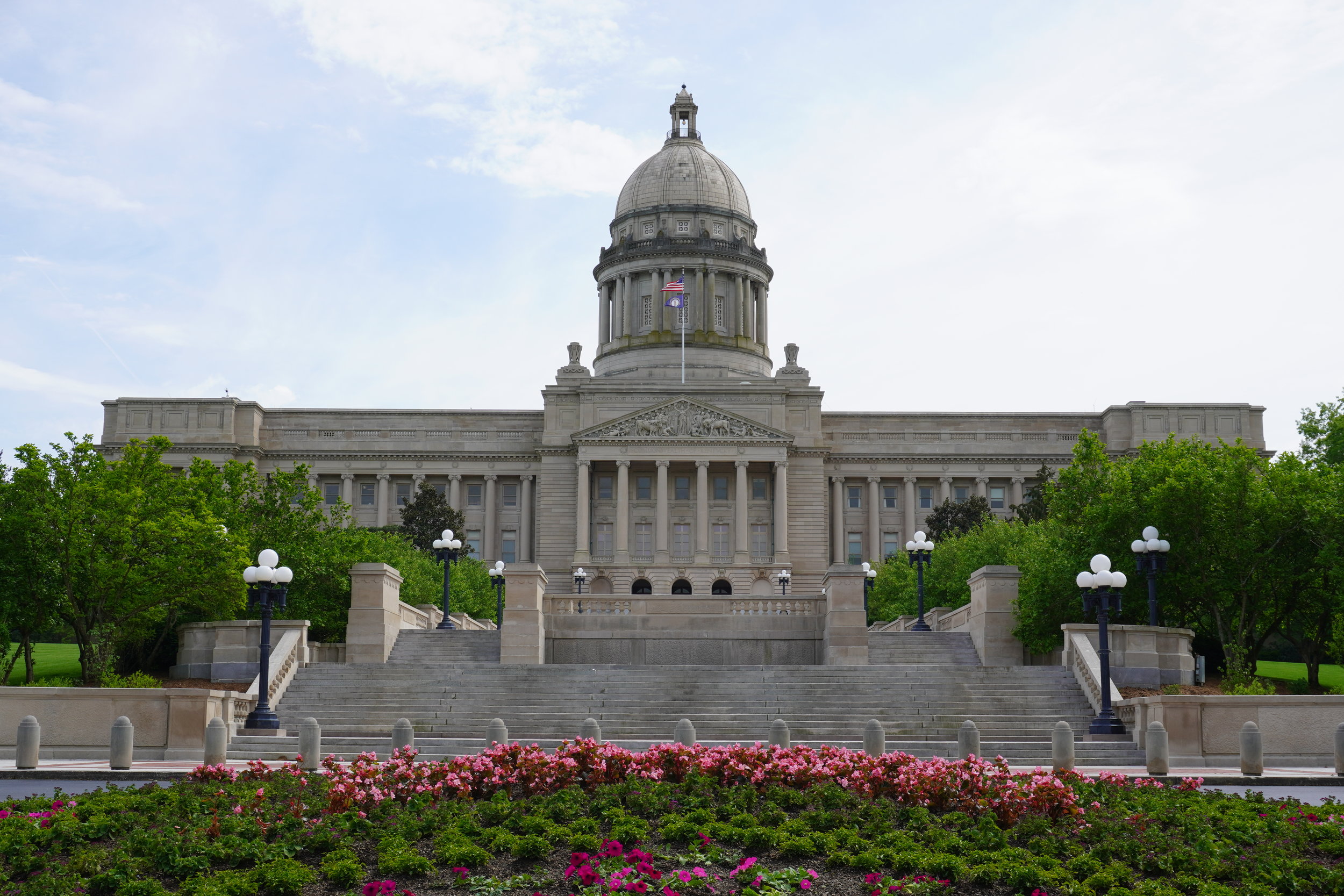
Many of you have emailed, messaged or called regarding various items in the budget, and on Wednesday, April 1st, the legislature sent a truncated, one-year budget to the Governor for consideration. Regrettably, this budget is based on revenue projections that no one believes we’ll hit in light of the COVID-19 pandemic. All raises for various state employees that have been discussed have been put on hold. Much needed increases in spending on education and infrastructure are almost entirely delayed. However, we are putting an emphasis on public health, unemployment, and along with several other changes to help all Kentuckians navigate these difficult waters, in Senate Bill 150, Kentucky’s own COVID-19 relief bill that was passed unanimously on March 26th and was signed into law on March 30th. The Executive, Judicial and Legislative branch budgets were all passed to cover spending only for the first half of the biennium. The General Assembly will return for its next regular session in 2021 to prepare a revised budget for the second year of the biennium, ostensibly based on updated economic forecasts. I know we all hope to have COVID-19 well behind us by then.

While the General Assembly currently plans to return for a final day (or possibly two days) in mid-April to consider overriding any vetos and to make final passage of other bills, leadership in both chambers are monitoring the emergency daily. The Kentucky Constitution prohibits the legislature from conducting business in an even-numbered year beyond midnight on April 15th. If we don’t return by then the legislature is adjourned automatically by constitutional mandate.

Unfortunately, with the COVID-19 emergency the legislature has, rightly, decided to recess for as much time as possible to minimize potential exposure to staff and legislators. As a result, many bills that were headed toward more debate and possible passage have fallen to the wayside in the interest of the most important policy work, namely those bills related to budgets, pensions, and public health. I feel confident many of these bills will be filed and pursued again in 2021.

Below I’ve included links to key budget and revenue documents, including a summary of the “main” budget document (Executive branch) to show some of the highlights. If you have questions or if I can help don’t hesitate to reach out. You can email me here, or call my Frankfort office at 502-564-8100.

In the meantime, please remember to maintain physical distance in accordance with CDC recommendations and stay home as much as possible!

Executive Budget
Judicial Budget
Legislative Budget
Revenue Bill
Road Plan
Executive Budget Summary

Quasi Quandary

Quasi Quandary

You have probably heard of the imminent extraordinary or “special” session of the Kentucky General Assembly. Included in the Governor’s veto message on HB358 from the 2019 Regular Session was a promise to issue a call for an extraordinary session to address the pension problem for quasi-governmental agencies before July 1. So what is this pension problem anyway?

Quasi-governmental agencies are pretty much exactly what their name suggests: agencies that are not explicitly government departments, but are exclusively (or very nearly exclusively) funded by government (read: taxpayer) funds, and they each perform essential functions for the populations they serve.* These agencies are designated as non-profit organizations. The Christian County Health Department, Pennyrile Children’s Advocacy Center, Sanctuary, and the Pennyroyal Mental Health Center are some of the primary quasi’s in this area, though the last three in that list have a service regions that extend well beyond our own county line.

No other agencies or arms of state government exist to perform any of these services.

A few decades ago, someone thought it would be good to include these agencies in the Kentucky Retirement Systems. I don’t think that’s a bad idea necessarily, and at the time it looked like a very good one. The employer contribution rate for each participating employee was very low. However, with time, that employer rate has climbed up. Today these agencies are paying somewhere in the neighborhood of 49% of payroll. That means, for every dollar of payroll, the agency is having to find another 49¢ to send to KRS. First, for these non-profit agencies, finding that additional 49¢ is very challenging, as it starves out funding for other important needs like adequately compensating staff, procuring important supplies, expanding their critical services (which all our communities need), or even maintaining their locations. Second, the 49¢ is actually way lower than it should be to keep KRS funded adequately. In truth the employer contribution rate should have been steadily climbing for many years.

So, here we are, facing a July 1st deadline when the rate jumps to at least 83% overnight. For other participating employers not deemed quasi-governmental we’ve already passed a solution that phases in that rate increase over time. Cities and counties now have a new imperative to find all the revenue they can to make ends meet. HB358 as passed this year would have forestalled that big rate jump for quasi-governmental agencies for a year while these agencies decide whether and how to proceed, by staying in the system or getting out, both of which would have resulted in increased costs. The veto struck that bill in its entirety, so without a special session to pass something else that offers immediate relief, the rate jumps up come July. With that enormous rate increase comes the almost certain reduction in staff and services for most, if not all, quasi agencies.

We risk the loss of staff and services from a group of agencies that provide services the state is neither prepared nor equipped to provide. The Pennyrile Children’s Advocacy Center performs forensic interviews and provides vital care and services for children victimized by sexual assault. Just a couple short months ago the Christian County Health Department helped administer hundreds of vaccinations for Hep-A after a handful of cases hit the county jail. Sanctuary provides emergency housing and security, among other services, for women and their children in need of escaping physical abuse. No other agencies or arms of state government exist to perform any of these services. PCAC, Sanctuary and the Pennyroyal Center serve multiple counties. If their employer contribution rate goes up in July those service footprints in other areas are at risk of evaporating.

On the other hand, the Kentucky Retirement System needs to be made whole. Even giving cities and counties phase-in relief last year hurt the CERS bottom line. Every day a participating employer or employee (or legislature) doesn’t pay all they’re supposed to, the system and its retirees get shortchanged. We can’t afford KRS going under. We can’t afford these agencies going under. A balance must be found.

We can’t afford KRS going under. We can’t afford these agencies going under. A balance must be found.

The Governor has done what legislative leadership asked following his veto: come to us with proposal. I attended a briefing conducted by his senior staff last week and I raised a number of questions. The bill includes a one year rate freeze for quasi agencies, and grants them that time to decide which path they want to take: stay in and pay full freight, or get out of the system through one of three different doors. I believe the agencies that cannot afford to pay the full price of staying in should get out of the system, but I firmly believe they should be given a way out that is affordable. The proposal provides only one way out that is truly affordable to most of these agencies, called the “hard freeze,” and requires all Tier 1 and 2 (the senior most) employees to be pulled out of the system along with the agency. Those workers will of course keep everything they’ve accrued, but cannot earn any additional time toward their retirement mark in KRS as long as they remain with that employer. I disagree with pulling those folks out of the system. The options that allow those employees to remain are cost prohibitive for all but the most wealthy quasi agencies, and I’m not aware of any agency in the three counties I represent that can afford them.

There are other concerns, unique to certain quasi agencies, including the change to how their payments to KRS are classified. State and Federal grant funds that flow to places like Sanctuary restrict the use of those dollars for costs directly related to personnel, and attached “fringe benefits.” The proposal would require payments from the agencies toward the unfunded liability, not explicitly connected to payroll, making today’s grant dollars used for payroll unavailable for tomorrow’s debt service.

Similarly, there are three community mental health centers, including the Pennyroyal Center, who act purely as hiring agents for the state when staffing certain facilities. Those employees are governed entirely by the state, but they are currently counted against the CMCHs’ unfunded liability. This is not right. Unfortunately, the proposal before us addresses neither of these issues, and I have been given no affirmative assurance that there will be a material, meaningful effort to fix those problems in the 2020 Regular Session.

I’ve asked the Governor and his team to make modest adjustments to the proposal to make the cessation options slightly more affordable, and to address these two issues that directly impact the local agencies for whom I speak in Frankfort. Unfortunately, I have received no feedback that suggests changes to the proposal would be welcome. I will continue to advocate for those changes, ahead of any potential special session, and during the 2020 session if need be. Needless to say, this issue is among the most complicated the legislature has had to deal with. Getting the answer just right is that much more important.

* The group of quasi-governmental agencies also include all public universities in the Commonwealth other than UK and UofL, both of whom have their own pension systems. However, this post is about all the quasi’s other than the universities. These institutions are also vital to the Commonwealth, but they are on a much different fiscal footing than all the others. They are able to raise tuition and fees, they each have private foundations, and generally have more assets than the rest of the quasi group. To my knowledge, the public university group has been satisfied with each version of HB358 that was passed during the regular session and they are in support of the Governor’s proposal.

Veto Recess

Veto Recess

One of the critical functions of government at the state and federal level is the system of "checks and balances" on power held by any one branch.  The General Assembly passes legislation but the Governor has the authority to either sign the legislation into law or veto the bill.  In the event of a gubernatorial veto, the legislature has the authority to override that decision.

The GA has exercised this authority in the past, overriding Governors' vetoes.  (I have seen a split legislature overturn a Democratic Governor's veto, and a Republican-controlled legislature overturn a Republican Governor's vetoes.)  This year the General Assembly preserved its authority to override a veto on a number of the most critical (and contentious bills) by passing them prior to the start of the veto recess.  By doing this, the legislature has reserved the final two days of session, after the veto period has expired for bills passed to date, to consider any vetoes for a possible override vote.

Earlier today, Governor Bevin issued two veto letters; one for the biennial budget and one for the tax/revenue bill passed alongside it.  You can view the Governor's veto letter for each bill linked below.  The General Assembly returns to session for its final two days on Friday and Saturday of this week.  Stay tuned for updates on if or when we consider overriding the vetoes.

Budget Veto
Revenue Veto

This Governor held a press conference explaining the veto on both bills, and sometime later in the day the Senate President and Speaker Pro Tempore of the House issued the following joint statement:


Commonwealth of Kentucky
Senate President Robert Stivers
House Speaker Pro Tempore David Osborne
 
For Immediate Release
April 5, 2018

Contact: John Cox
John.Cox@LRC.KY.GOV
 
Contact: Daisy Olivo
Daisy.Olivo@LRC.KY.GOV


SENATE PRESIDENT, SPEAKER PRO TEMPORE RELEASE JOINT STATEMENT RESPONDING TO GOVERNOR BEVIN’S VETOES
 
FRANKFORT, Ky. (April 9, 2018) – The following is a joint statement from Senate President Robert Stivers (R-Manchester) and House Speaker Pro Tempore David Osborne (R-Prospect) reacting to Governor Matt Bevin’s announcement to veto House Bill 200 and House Bill 366:
 
“We believe Governor Bevin is misguided in his interpretation of the budget and the revenue bills, as we are comfortable with LRC staff revenue projections. To our knowledge, the Governor has had no discussions with any legislators on the details of this budget and what he might consider to be a shortfall. We believe Governor Bevin would be best served to meet with legislators to understand their thoughts and rationale before making a final decision on vetoing the revenue and/or budget bills.”
 
# # #


NOTE: You can find links to each of the Governor's 2018 veto letters here, which is updated as new vetoes are issued.